
We’re excited to announce that Dr. Jeffrey M. Martinez is now offering Genicular Artery Embolization (GAE)—a groundbreaking, minimally invasive treatment for knee osteoarthritis pain.

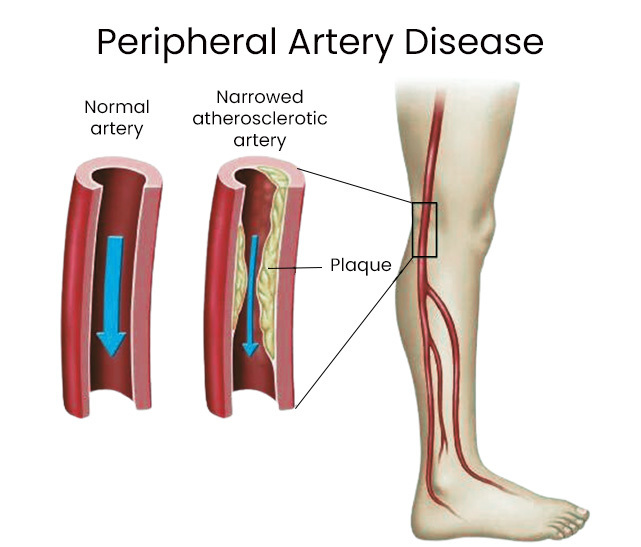
Peripheral Artery Disease, commonly referred to as PAD, is a serious circulatory condition where narrowed arteries reduce blood flow to the limbs. This narrowing is primarily caused by atherosclerosis, a process where fatty deposits, cholesterol, and calcium build up in the arterial walls. Over time, this plaque hardens and narrows blood vessels, reducing oxygen and nutrient delivery to your extremities, most often the legs.
PAD is a prevalent condition, affecting approximately 6.5 million people age 40 and older in the United States. It is a critical indicator of systemic atherosclerosis, meaning that individuals with PAD are at a significantly higher risk for cardiovascular events such as heart attack and stroke. Early detection and intervention by specialized vascular professionals are essential to manage the disease and mitigate these serious health risks. At Espada Vascular, we focus on diagnosing and treating complex arterial conditions to restore healthy circulation and improve your quality of life.

This short questionnaire will help us determine if you are likely to have, or at risk of developing, Peripheral Arterial Disease (PAD). Please answer each of the questions below.
Note: This quiz is not a substitute for professional medical evaluation. If you are concerned about your risk for PAD, please consult your healthcare professional or contact us for an appointment.
The primary cause of PAD is atherosclerosis. While the exact reason why plaque builds up in the arteries is complex, several key risk factors significantly increase your likelihood of developing the condition. Understanding these factors can help you make informed lifestyle choices and seek appropriate medical screening.
Accurate diagnosis is crucial for developing an effective treatment plan. At Espada Vascular, we use state-of-the-art diagnostic tools to comprehensively assess your vascular health.
The initial step often involves a physical examination and a review of your medical history and symptoms. We may check for weak or absent pulses in your legs and feet. The most common and effective noninvasive test we use is the Ankle Brachial Index (ABI). This simple test compares the blood pressure in your ankle to that in your arm. Lower ankle blood pressure indicates a blockage in the leg arteries.
To provide a more detailed view of your vascular anatomy, we may use advanced imaging techniques. Ultrasound imaging allows us to see how blood moves through your blood vessels and identify the exact location and severity of blockages. In some cases, angiography may be necessary. This involves using X-ray imaging with a contrast dye to precisely map arterial blockages and plan for intervention. We can also use an ultrasound inside the artery to obtain a 3D image of the blood vessel.
For patients with early-stage PAD or mild symptoms, conservative management is often the first line of defense. We work closely with you to implement essential lifestyle changes.
In conjunction with lifestyle changes, we recommend follow-up care with your primary care physician to manage your risk factors, such as diabetes and hypertension.

When lifestyle changes and medications are insufficient, or in more advanced cases of PAD, we specialize in minimally invasive endovascular interventions. These procedures are designed to open narrowed or blocked arteries and restore healthy blood flow without the need for large surgical incisions.
These endovascular procedures are performed on an outpatient basis using local anesthesia and moderate sedation, allowing for a quicker recovery and a faster return to normal activities.