New Knee Osteoarthritis Solution at Espada Vascular!

We’re excited to announce that Dr. Jeffrey M. Martinez is now offering Genicular Artery Embolization (GAE)—a groundbreaking, minimally invasive treatment for knee osteoarthritis pain.

Peripheral Artery Disease (PAD) Treatment in San Antonio

What is Peripheral Artery Disease (PAD)?

Peripheral Artery Disease, commonly referred to as PAD, is a serious circulatory condition where narrowed arteries reduce blood flow to the limbs. This narrowing is primarily caused by atherosclerosis, a process where fatty deposits, cholesterol, and calcium build up in the arterial walls. Over time, this plaque hardens and narrows blood vessels, reducing oxygen and nutrient delivery to your extremities, most often the legs.

PAD is a prevalent condition, affecting approximately 6.5 million people age 40 and older in the United States. It is a critical indicator of systemic atherosclerosis, meaning that individuals with PAD are at a significantly higher risk for cardiovascular events such as heart attack and stroke. Early detection and intervention by specialized vascular professionals are essential to manage the disease and mitigate these serious health risks. At Espada Vascular, we focus on diagnosing and treating complex arterial conditions to restore healthy circulation and improve your quality of life.

Recognizing the Symptoms of PAD

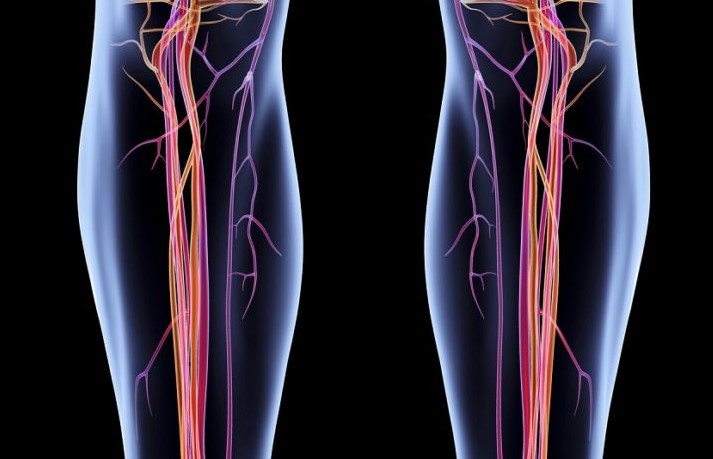
Many individuals with PAD may not experience noticeable symptoms in the early stages, making regular checkups vital for those with risk factors. However, as the arteries become increasingly blocked, symptoms will develop. The most common symptom is claudication, which presents as muscle or calf pain or cramping triggered by physical activity, such as walking or climbing stairs. This pain typically subsides after a few minutes of rest. PAD can progress to more severe stages, leading to symptoms that severely impact daily life. These advanced symptoms include:
  • Pain, numbness, heaviness, or weakness in the legs during exertion.
  • Burning pain in the toes and feet while at rest, which may disturb sleep.
  • Sores or wounds on the legs, feet, or toes that heal very slowly or fail to heal entirely.
  • Noticeable color changes in the feet, where the skin may turn pale or bluish.
  • Poor nail growth and decreased hair growth on the legs and toes.
  • A noticeable temperature difference, where one lower leg or foot feels colder than the other.
In advanced cases, the restricted blood flow can lead to critical limb ischemia, a severe condition that requires medical attention to prevent tissue death and potential amputation.

Espada Vascular, San Antonio's Trusted PAD Specialist

At Espada Vascular, our board-certified vascular surgeon brings decades of experience in diagnosing and treating complex arterial conditions right here in San Antonio. We are committed to delivering personalized, evidence-based care using the latest minimally invasive technologies to restore your circulation and quality of life.

Are You at Risk for PAD?

Are You at Risk for Peripheral Arterial Disease?

This short questionnaire will help us determine if you are likely to have, or at risk of developing, Peripheral Arterial Disease (PAD). Please answer each of the questions below.


Note: This quiz is not a substitute for professional medical evaluation. If you are concerned about your risk for PAD, please consult your healthcare professional or contact us for an appointment.

Causes and Risk Factors for PAD

The primary cause of PAD is atherosclerosis. While the exact reason why plaque builds up in the arteries is complex, several key risk factors significantly increase your likelihood of developing the condition. Understanding these factors can help you make informed lifestyle choices and seek appropriate medical screening.

  • Smoking: This is the single most significant modifiable risk factor. Smoking increases the risk of developing PAD fourfold. The chemicals in tobacco smoke damage the arterial lining, promote plaque buildup, and increase the risk of blood clots. Research published in cardiovascular journals highlights that smoking cessation is crucial for reducing PAD progression.
  • Age: The risk of PAD increases significantly as you get older, particularly for individuals over the age of 60.
  • Diabetes: Diabetes is the single most significant risk factor in our community. People with diabetes have a substantially higher risk of developing PAD, often experiencing more severe and diffuse arterial blockages.It is important to maintain good follow-up with your primary care physician or endocrinologist to manage this risk factor and limit its effect on the development of PAD
  • High Blood Pressure: Chronic high blood pressure adds stress to arterial walls, contributing to arterial stiffness and plaque formation.
  • High Cholesterol: Elevated levels of LDL (bad) cholesterol and triglycerides contribute directly to the fatty deposits(plaque) that narrow the arteries.
  • Obesity: Excess body weight is a known contributing factor to systemic vascular issues.
  • Family History: A family history of PAD, heart disease, or stroke increases your genetic predisposition to the condition.

How is Peripheral Artery Disease Diagnosed?

Accurate diagnosis is crucial for developing an effective treatment plan. At Espada Vascular, we use state-of-the-art diagnostic tools to comprehensively assess your vascular health.

The initial step often involves a physical examination and a review of your medical history and symptoms. We may check for weak or absent pulses in your legs and feet. The most common and effective noninvasive test we use is the Ankle Brachial Index (ABI). This simple test compares the blood pressure in your ankle to that in your arm. Lower ankle blood pressure indicates a blockage in the leg arteries.

To provide a more detailed view of your vascular anatomy, we may use advanced imaging techniques. Ultrasound imaging allows us to see how blood moves through your blood vessels and identify the exact location and severity of blockages. In some cases, angiography may be necessary. This involves using X-ray imaging with a contrast dye to precisely map arterial blockages and plan for intervention. We can also use an ultrasound inside the artery to obtain a 3D image of the blood vessel.

Comprehensive Treatment Options for PAD

At Espada Vascular, we offer advanced PAD Treatment in San Antonio, tailored to each patient’s specific needs and condition severity. Our goal is to relieve symptoms, improve mobility, and prevent serious complications.

Lifestyle Modifications and Medical Management

For patients with early-stage PAD or mild symptoms, conservative management is often the first line of defense. We work closely with you to implement essential lifestyle changes.

    • Smoking Cessation: Quitting smoking is paramount. It is the most effective way to halt the progression of PAD and reduce the risk of heart attack and stroke.
    • Supervised Exercise Therapy: We strongly recommend supervised exercise programs. Regular, structured walking exercises help your body adapt to reduced blood flow and can dramatically improve your walking distance and reduce pain.
    • Healthy Diet: Adopting a diet low in saturated fats and high in fruits, vegetables, and whole grains helps manage cholesterol and blood pressure levels.

In conjunction with lifestyle changes, we recommend follow-up care with your primary care physician to manage your risk factors, such as diabetes and hypertension.

Minimally Invasive Endovascular Procedures

When lifestyle changes and medications are insufficient, or in more advanced cases of PAD, we specialize in minimally invasive endovascular interventions. These procedures are designed to open narrowed or blocked arteries and restore healthy blood flow without the need for large surgical incisions.
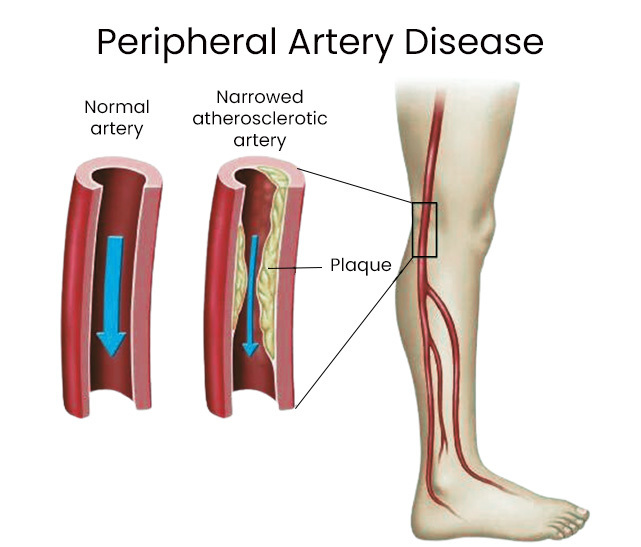
  • Balloon Angioplasty: This procedure involves threading a specialized catheter with a small balloon at its tip into the narrowed artery. Once in position, the balloon is inflated to compress the plaque against the arterial walls, widening the vessel and restoring blood flow. Some balloons may be drug-coated and release this drug on the vessel wall to aid in limiting restenosis of the artery.
  • Stent Placement: Often performed alongside angioplasty, a stent is a small, expandable metal mesh tube placed inside the artery to act as a scaffold. It helps keep the artery open and prevents it from narrowing again. Some of these stents may be laced with medication to retard the progression of artery re-stenosis.
  • Atherectomy: In some cases, the plaque buildup may be too hard or extensive for angioplasty alone. Atherectomy involves using specialized catheters equipped with a tiny cutting or grinding device or a laser to physically remove plaque from the arterial wall.
  • Lithotripsy: Lithotripsy involves a specialized balloon that delivers energy pulses to crack the plaque in very calcified arteries, allowing modification of the arterial wall to achieve better arterial opening. This is always used in combination with another treatment option such as balloon angioplasty, stent, and/or atherectomy.

These endovascular procedures are performed on an outpatient basis using local anesthesia and moderate sedation, allowing for a quicker recovery and a faster return to normal activities.

Frequently Asked Questions About PAD

What is the difference between PAD and varicose veins?

PAD is an arterial condition caused by plaque buildup that restricts blood flow to the legs. Varicose veins are a venous condition involving damaged valves in the veins. They are distinct conditions requiring different specialists and treatments. Please note that we do not treat spider veins at our practice.
Most of our minimally invasive procedures are performed with local anesthesia and moderate sedation, so patients experience little to no discomfort during the procedure. Some mild soreness at the access site is normal afterward, but recovery time is generally minimal.
If you are experiencing leg pain, cramping, or fatigue during walking that go away with rest, slow-healing wounds on your feet or legs, or noticeable color or temperature changes in your lower extremities, a vascular evaluation is strongly recommended.
Most PAD treatments, including diagnostic testing and minimally invasive procedures, are covered by Medicare and most major insurance plans. Insurance plans are making it increasingly difficult to authorize procedures for treatment. Please know that we fight these insurance policies diligently to preserve limb perfusion for our patients. We recommend contacting our office directly to verify your specific coverage.
The most impactful steps are quitting smoking, managing blood pressure and cholesterol, controlling blood sugar if you have diabetes, and staying physically active. Reviewing our Smoking Cessation Guide is a great first step.