
We’re excited to announce that Dr. Jeffrey M. Martinez is now offering Genicular Artery Embolization (GAE)—a groundbreaking, minimally invasive treatment for knee osteoarthritis pain.
A venous ulcer is more than an open wound. It is often caused by an underlying vein problem that creates too much pressure in the lower leg and makes it difficult for damaged tissue to heal.
At Espada Vascular, we provide venous ulcer treatment in San Antonio focused on identifying and treating the venous disease contributing to the wound. Led by board-certified vascular surgeon Jeffrey M. Martinez, MD, our team evaluates your circulation to determine why an ulcer is not healing and which treatments may help.
Depending on the cause, treatment may include specialized wound care, compression therapy, or vein ablation.
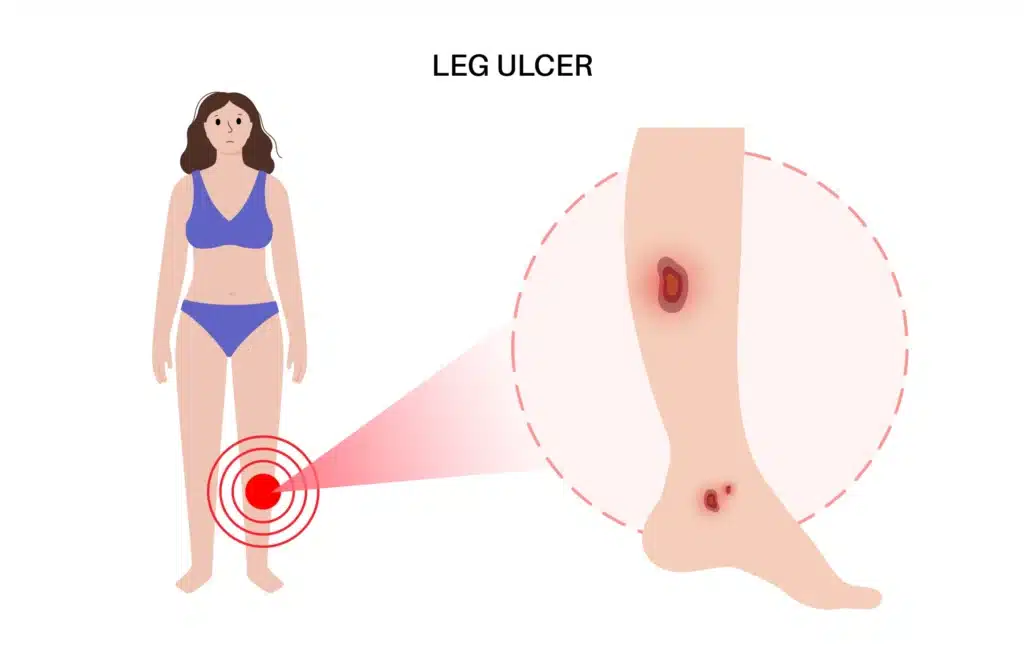
A venous ulcer, also called a venous leg ulcer or venous stasis ulcer, is a chronic open wound caused by increased pressure within the veins of the lower leg.
Healthy veins contain one-way valves that help move blood from the legs back toward the heart. When these valves become damaged or stop working correctly, blood can flow backward and pool in the lower legs.
Over time, this increased pressure can cause:
Venous ulcers most commonly develop around the ankle or lower leg. Without proper venous leg ulcer treatment, the wound may remain open for weeks or months or return after initially healing.
Learn more about the venous diseases treated at Espada Vascular.
A venous leg ulcer often develops after other symptoms of chronic venous disease have already appeared.
Common signs and symptoms include:
A leg wound that will not heal should be properly evaluated because not every ulcer is caused by venous disease. Peripheral Artery Disease, diabetes, neuropathy, and other conditions can also contribute to chronic wounds.
Treating a venous ulcer requires more than simply covering the wound. Finding the circulation problem that caused the ulcer is an important part of developing an effective treatment plan.
Dr. Jeffrey M. Martinez is a board-certified vascular surgeon with additional training in endovascular surgery and extensive experience treating arterial and venous disease of the lower extremities.
This allows Espada Vascular to evaluate the vascular condition contributing to a non-healing wound and determine which treatment options may be appropriate.
Effective venous stasis ulcer treatment often involves two parts.
Treatment of the open wound may include specialized dressings, compression bandaging, management of wound drainage, skin care, and treatment of infection when present.
If testing identifies veins that are allowing blood to flow backward and pool in the lower leg, treatment may be recommended to close those incompetent veins.
Ther is strong medical evidence supporting this approach.
The EVRA randomized clinical trial published in The New England Journal of Medicine found that patients with venous ulcers and superficial venous reflux healed faster when endovenous treatment was performed early in addition to compression therapy.
A Cochrane systematic review of endovenous treatment for venous leg ulcers also concluded that endovenous ablation combined with compression improves ulcer healing compared with compression alone or delayed treatment.
The goal is not simply to cover the wound. It is to identify and treat the venous disease contributing to it.

A venous stasis ulcer usually develops after venous pressure has remained elevated for a long period of time.
Underlying conditions may include:
Some patients have more than one condition affecting wound healing.
For example, someone with diabetes may also have venous disease or Peripheral Artery Disease. This makes identifying the actual cause of a chronic leg or foot wound especially important.
Espada Vascular also provides Peripheral Artery Disease treatment in San Antonio for patients with reduced arterial blood flow.

Before recommending chronic venous ulcer treatment, Espada Vascular evaluates the wound and the circulation in the affected leg.
Your evaluation may include reviewing:
These details can help determine whether venous disease is likely contributing to the wound.
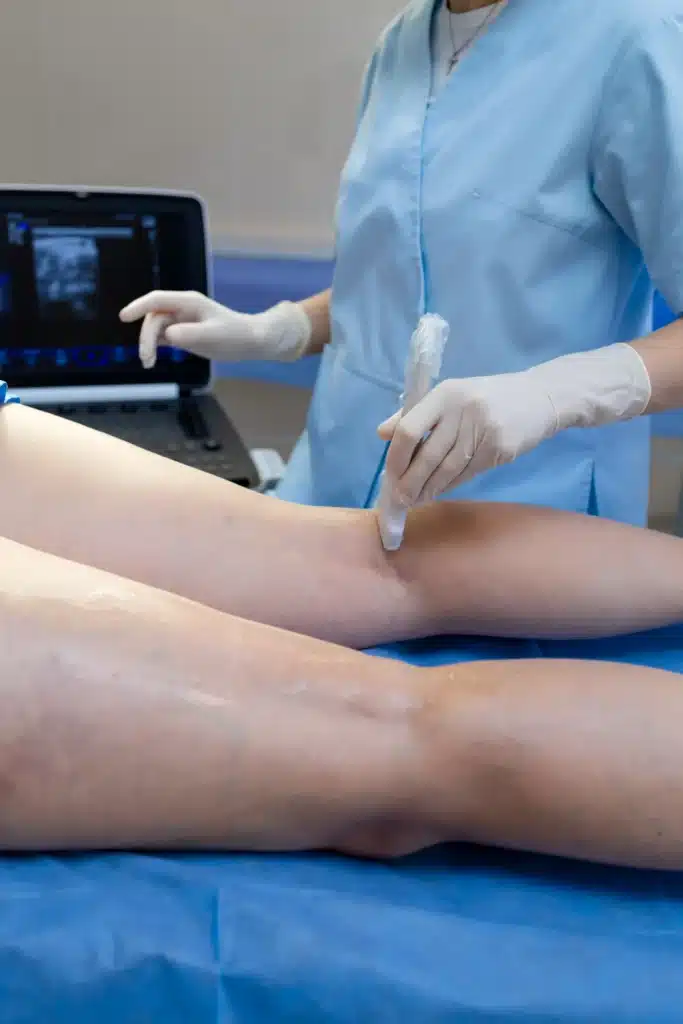
Espada Vascular uses duplex ultrasound to identify venous insufficiency and reflux.
Duplex ultrasound uses sound waves to show how blood is moving through the veins. It can identify veins with damaged valves that allow blood to flow backward and collect in the lower leg.
The Society for Vascular Surgery, American Venous Forum, and American Vein and Lymphatic Society guidelines recommend duplex ultrasound as the primary diagnostic test for evaluating lower-extremity venous reflux.
Some non-healing wounds are caused by poor arterial blood flow rather than venous disease. Other patients may have both arterial and venous circulation problems.
When symptoms suggest Peripheral Artery Disease, additional testing can help determine whether enough oxygen-rich blood is reaching the leg and foot.
This distinction is important because a venous leg ulcer and a PAD-related foot ulcer have different causes and may require different treatments.

Treatment is based on the type and severity of venous disease identified during your evaluation.
Compression bandaging is an important part of venous stasis ulcer treatment.
Compression places controlled pressure on the lower leg to help:
The European Society for Vascular Surgery guidelines recommend compression therapy as a central treatment for active venous leg ulcers.
If abnormal superficial veins are contributing to the ulcer, vein ablation may be recommended.
Espada Vascular specifically offers vein ablation for appropriate patients with venous ulcers.
During vein ablation, the diseased vein is closed so blood can redirect through healthier veins. Espada Vascular uses techniques including radiofrequency or laser energy to treat appropriate venous disease.
Closing the abnormal vein can reduce the venous pressure contributing to the ulcer.
Espada Vascular also offers Varithena for appropriate venous ulcer patients.
Varithena is an injectable polidocanol microfoam used to close certain incompetent superficial veins without heat.
The foam is introduced into the diseased vein, causing it to close. Blood is then redirected through healthier veins.
Whether Varithena or vein ablation is appropriate depends on the anatomy and source of the patient’s venous disease.

| Treatment | How It Helps |
|---|---|
| Specialized Wound Care | Protects the ulcer, manages drainage, and supports healing |
| Compression Therapy | Reduces swelling and pressure within the veins |
| Vein Ablation | Closes incompetent veins contributing to venous reflux |
| Varithena | Uses injectable microfoam to close certain diseased superficial veins without heat |
The right treatment depends on what is causing the ulcer. Espada Vascular evaluates each patient’s circulation before determining the most appropriate treatment plan.
Not every chronic leg wound is a venous ulcer.
A venous ulcer develops when blood has difficulty returning from the lower leg toward the heart. These ulcers commonly occur near the ankle and may be accompanied by swelling, skin discoloration, and other signs of chronic venous insufficiency.
An arterial ulcer develops when inadequate blood flow prevents enough oxygen from reaching the tissue.
Peripheral Artery Disease is a common cause of arterial wounds. A PAD foot ulcer may occur on the foot or toes and may be associated with symptoms such as:
Some patients have both arterial and venous disease, which is why determining the source of a non-healing wound is important before treatment begins.

A venous ulcer is a chronic open wound caused by increased pressure within the veins of the lower leg. It most commonly develops around the ankle and is frequently associated with chronic venous insufficiency.
Treatment depends on the underlying vein problem. Compression and specialized wound care are commonly used. If venous reflux is contributing to the ulcer, vein ablation or Varithena may also be appropriate.
Yes. In appropriately selected patients with superficial venous reflux, clinical research has shown that treating abnormal veins in addition to compression can help ulcers heal faster.
A wound can heal while the underlying venous disease remains. If blood continues to pool and create high pressure in the lower leg, the skin can remain vulnerable to another ulcer.
No. Venous ulcers are caused primarily by abnormal venous circulation and increased venous pressure. Diabetic foot ulcers are commonly associated with neuropathy, pressure, and impaired healing.
A patient can have diabetes and venous or arterial disease at the same time.
A venous ulcer develops because blood is not returning efficiently from the leg.
A PAD-related ulcer develops because inadequate arterial blood flow is reaching the tissue.
Because the causes are different, the appropriate treatments can also be very different.
Venous ulcers most commonly develop around the ankle and lower leg. They may occur alongside swelling, skin discoloration, inflammation, or hardened skin.
Diagnosis usually includes examination of the wound, review of symptoms, and vascular testing. Duplex ultrasound can identify venous reflux and help determine whether chronic venous insufficiency is contributing to the wound.
Yes. Espada Vascular treats venous ulcers as part of its venous disease services. Available treatments may include specialized wound care, compression bandaging, vein ablation, and Varithena depending on the patient’s evaluation.
Yes. Patients searching for leg ulcer treatment in Seguin or venous ulcer treatment in Seguin can receive vascular evaluation and treatment through Espada Vascular.
Learn more about vascular care for patients from Seguin.
A chronic leg wound may be a sign of an underlying circulation problem.
If you have a venous stasis ulcer in San Antonio, TX, a wound that keeps returning, chronic leg swelling, or skin changes around the ankle, Espada Vascular can evaluate your circulation and determine whether venous disease is preventing the wound from healing.
Dr. Martinez and the Espada Vascular team provide venous ulcer treatment in San Antonio focused on identifying the underlying vein problem and selecting the appropriate treatment for each patient.